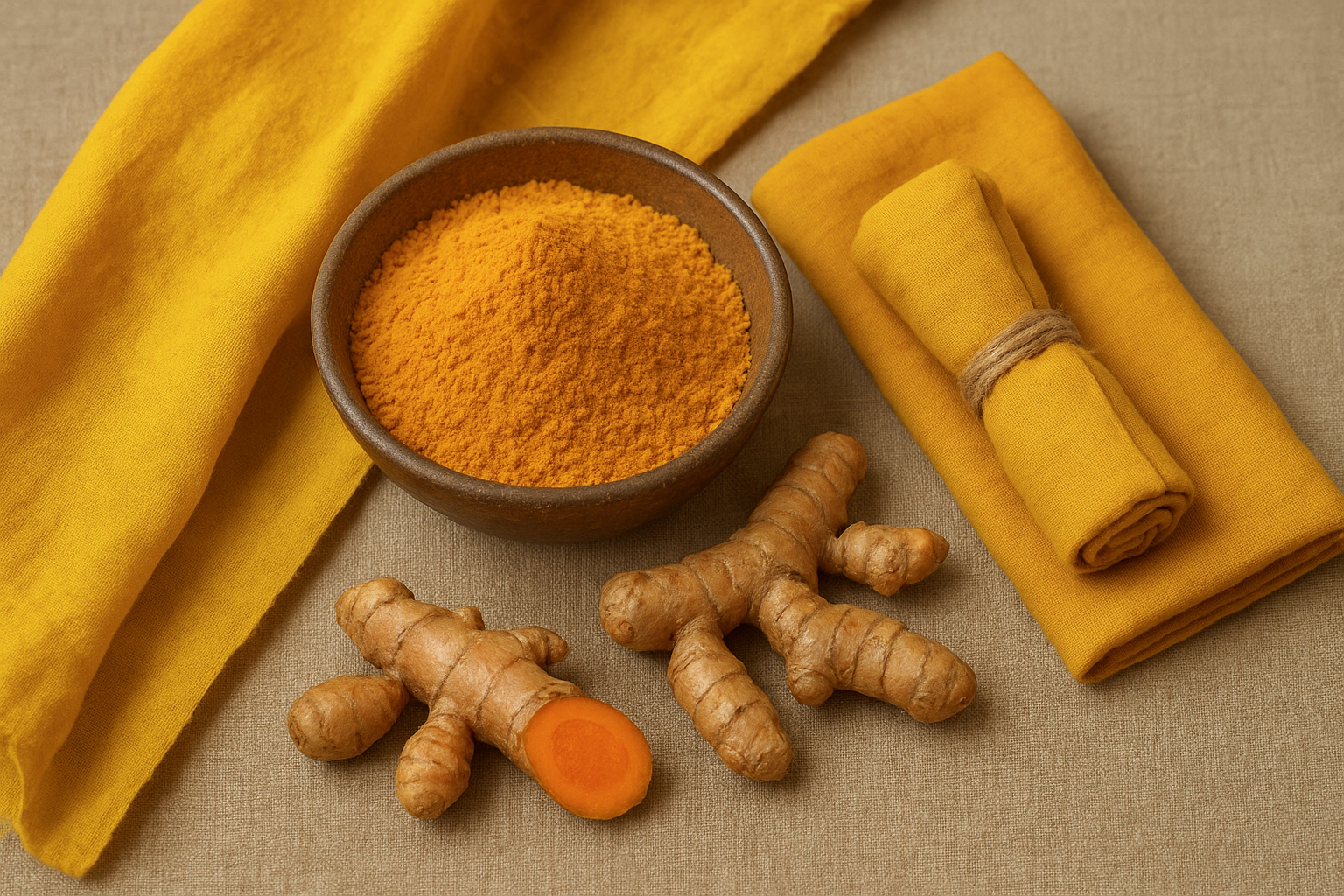
Long before it brightened our curries or lattes, turmeric was colouring cloth in vibrant shades of yellow. Today, this ancient natural dye is making a comeback—championed by textile artists, eco-conscious designers and lovers of sustainable living across the UK. This article explores turmeric dye from its origins to its modern-day relevance, offering a thoughtful look into one of nature’s brightest gifts.
Origins and Historical Background
Turmeric (Curcuma longa) is native to South and Southeast Asia, particularly India, where it has been cultivated for over 4,000 years. Revered not only as a spice but also as a medicine and dye, it has been a key part of cultural and spiritual practices.
Historically, it was used to dye robes for Buddhist monks, symbolising purity and renunciation. In India, turmeric-dyed fabrics play a role in weddings and rituals, representing prosperity and protection. Through trade routes, turmeric travelled to the Middle East and Europe, where it was adopted both as a culinary ingredient and a textile dye.

Traditional and Modern Extraction Methods of Turmeric
Traditional Extraction
Traditionally, turmeric dye is made by:
- Harvesting the rhizomes from the turmeric plant.
- Boiling or simmering the chopped roots in water to release the pigment—curcumin.
- The liquid is then strained to create a vibrant yellow dye bath.
This simple method is still widely used in homes and artisan workshops across India, Indonesia and Sri Lanka.
Modern Extraction
In modern textile studios, turmeric dye may be extracted by:
- Grinding dried turmeric into powder for consistency and accessibility.
- Mixing the powder in hot water or alcohol-based solvents to extract colour more efficiently.
- Some eco-textile manufacturers now use ultrasonic or heat-assisted extraction, improving pigment yield while reducing water usage and waste.
Dyeing Techniques
1. Preparing the Fabric
Before dyeing, natural fibres such as cotton, linen, wool or silk must be cleaned (a process known as scouring) to remove oils and impurities.
2. Using Mordants
Mordants are substances that help fix the dye to fabric. Common mordants used with turmeric include:
- Alum (potassium aluminium sulphate) – produces a bright yellow.
- Iron (ferrous sulphate) – darkens the shade to mustard or olive tones.
- Some natural dyers opt for mordant-free methods, using soya milk or tannin-rich plants to increase colourfastness.
3. Dye Application
- The fabric is soaked in the prepared dye bath for 30 minutes to several hours, depending on the desired intensity.
- After removal, it is rinsed gently and dried away from direct sunlight to prevent fading.
- Techniques like tie-dye, block printing, and resist dyeing (batik or shibori) can be used to create patterns.

Cultural, Environmental and Modern-Day Significance of Turmeric
Cultural Value
Turmeric remains deeply rooted in South Asian culture—used in wedding ceremonies, religious rituals, and traditional clothing. Its golden hue is associated with purity, health and fortune.
Environmental Benefits
- Biodegradable and non-toxic, it is a safe alternative to synthetic dyes, which often contain harmful chemicals and heavy metals.
- It requires minimal processing and water, making it ideal for low-impact, slow-fashion practices.
However, turmeric dye has one drawback—poor lightfastness, meaning it can fade with prolonged sunlight exposure. Many artisans accept this as part of the dye’s organic charm.
Modern Revival
From artisan markets in Brighton to sustainable fashion studios in London and Edinburgh, turmeric dye is enjoying renewed popularity. It appears in:
- Hand-dyed scarves, wool, dresses and home textiles
- Workshops and natural dye kits for hobbyists
- Eco-conscious fashion collections
Designers value it not just for its colour, but for the story it carries—one of heritage, ecology and craftsmanship.
Final Thoughts
Turmeric is far more than a kitchen spice—it is a bridge between ancient tradition and contemporary sustainability. As more people in the UK explore natural dyes, turmeric continues to captivate with its rich history, radiant colour and environmental promise. Whether you’re a textile enthusiast or simply curious about sustainable design, turmeric offers an inspiring glimpse into the art of dyeing with nature.
Go to Home Page for other similar content.